


In Kenya, there was a time when you couldn’t mention the words cooking and electricity in the same sentence. “Back in those days ,”electricity connectivity was too low for e-cooking activities in most parts of the country – “in 2010, not even 25% of the population had access.” But now, thanks to the government’s efforts, over 75% of Kenya’s population is connected to electricity. Despite this, most Kenyans still opt to cook with other fuels and technologies they have been used to for a long time, this is due to misconceptions such as electric cooking being too expensive and unsafe. There is also a lack of awareness and many false perceptions about e-cooking among Kenyans. However, there is finally light (and cooking!) at the end of the tunnel with the number of well-informed e-cooking advocates growing thanks to the recent wave of hub launches in different counties.
By Lynn Ngatia, Jon Leary, Beryl Onjala, Danson Ligare, Simon Kiragu and Brian Murumba.
The Launch
The most recent, among a series of cooking hubs, launched was the Kakamega Hub. The Clean Cooking Association of Kenya(CCAK) in collaboration with Kenya Power, Gamos East Africa, African Center for Technology Studies, Ministry of Energy and Petroleum, Modern Energy Cooking Services, UK PACT, and the University of Loughborough , on 8th June 2023, descended on Kakamega town’s Lurambi Youth Empowerment Center to set up the fifth eCooking hub in the country. In keeping with the previous hub launches, the atmosphere was highly interactive and friendly, adding Luhya traditional songs and dancing as the icing on the cake.

Kakamega County has a population of 1,867,579 with 1,682,239 rural population and 185,340 urban population as per the 2019 Census. The main energy source for cooking in Kakamega County is solid biomass (firewood and charcoal) as it accounts for 95.7% of the energy needs. Meanwhile, the electricity access stands at 25.1%, meaning that one quarter of the County’s population could potentially transition to cooking with electricity. The constituency of Lurambi is one area with the highest charcoal adoption at 32%. The launch of the e-cooking hub comes as good news to the people of Kakamega, especially the majority rural population who stand to learn a lot about cooking with electricity and hopefully adopt the technology.

The banishing of the ‘UGALI’ myth in Western Kenya.
The launch of the Kakamega e-cooking hub is expected to help catalyse behavior change and the tackle the false perception that ugali cannot be cooked on an e-cooking appliance to the required standard according to the Luhya community. Many people in Western Kenya believe that only biomass can be used to cook ugali to meet their requirements. But with the county government buying into the e-cooking idea and the existence of a hub in the area, the perception is expected to change significantly in the near future through sensitization by the hub champions in the local communities.
The 2-day hub launch Story.
For the first time since the launching of e-cooking hubs started, representatives from the previously launched hubs ie: Clean Cooking Association of Kenya(CCAK) in collaboration with Kenya Power, Gamos East Africa, African Center for Technology Studies, Ministry of Energy and Petroleum, Modern Energy Cooking Services, UK PACT, and the University of Loughborough ,were invited to participate in the launch and also share their experiences in running the hubs;
Makueni E-Cooking Hub’s journey.

The Makueni E-cooking Hub was represented by Benson Kimuyu, the head of the Hospitality and Institutional Management Department at Wote Technical Training Institute in Makueni County. Mr. Benson shared their unique approach to e-cooking advocacy and training which has been done by integrating the e-cooking appliances into the institution’s curriculum for hospitality students and staff to interact with the technology and in turn act as champions of e-cooking in the area. He also highlighted how the institute managed to cut its gas bills in half and completely eliminate the use of charcoal. Additionally, the shorter cooking time facilitated by e-Cooking enabled them to teach twice as many classes each day. Makueni’s success exemplified the multifaceted benefits of embracing sustainable cooking practices.
Nakuru E-Cooking Hub Story.

Anastacia Kamau from SCODE (Sustainable Community Development Services), the organisation that houses the Nakuru e-cooking hub, talked about how much impact the hub has had on the surrounding community starting with the empowerment of a self-help group established by local residents in the area who sought to become champions of the e-cooking practice after participating in SCODE’s early e-cooking pilots. The group’s main aim was to create economic opportunities for their members by purchasing and using electric pressure cookers to cook food for sale and use them to train and sensitize the community on e-cooking.
Kitui E-Cooking Hub Story.

Kelvin Muthui, from Caritas Kitui, represented the hub at the event where he highlighted the need for collaboration between different stakeholders to ensure that e-cooking goes to the next level. He shared valuable insights on how e-Cooking is simultaneously curbing deforestation and reducing cooking fuel expenses by minimizing charcoal usage and usage of energy-efficient appliances in cooking. He explained the hub’s approach, which is designed to promote sustainability while empowering individuals economically. He also mentioned the challenges they have been experiencing on the ground, including little or no information on e-cooking among the residents of Kitui and some of the lessons they have learned along the way.
The Kakamega eCooking Hub Launch
The launch of the Kakamega e-Cooking Hub was a celebration of a greener future and a call to action. It inspired individuals, communities, and organizations to embrace the benefits of e-Cooking, driving us toward a more sustainable and environmentally friendly way of preparing our meals. The momentous occasion began with the opening remarks from Dr. Faith Wandera, a representative from the Ministry of Energy and Petroleum, who emphasized the hub’s significance in Kenya’s clean cooking transition. She said that this pioneering initiative would not only revolutionize cooking practices but also contribute to a greener and more sustainable future, noting that the government through the ministry will support such initiatives to promote adoption and access to clean cooking.
Representatives from Kenya Power also addressed the community, assuring them of their unwavering support for e-cooking initiatives through last-mile connectivity. Their commitment further highlighted the growing recognition of the importance of eco-friendly cooking practices and the collaborative efforts required to achieve widespread adoption.
The eCooking Competition
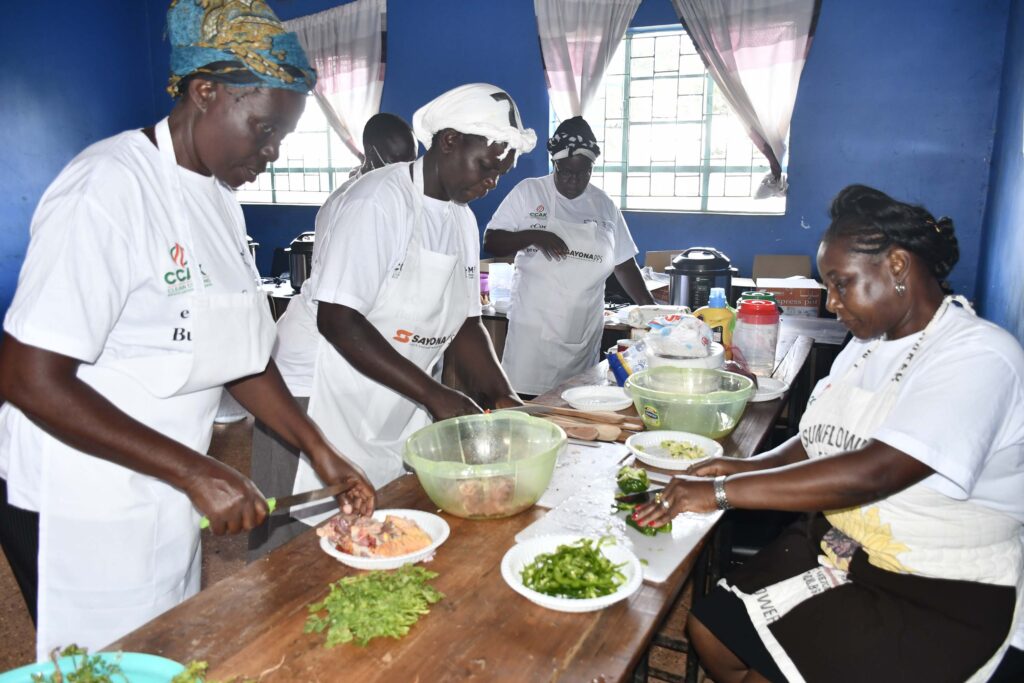
To add an element of excitement and friendly competition, a cooking competition took place during the launch of the Hub. The e-cooking champions of Kakamega demonstrated their culinary skills as they prepared various meals using Electric Pressure Cookers (EPCs). It was a delightful spectacle that showcased the versatility and efficiency of these innovative cooking solutions. The aroma of delicious dishes filled the air, captivating the senses of everyone present and reinforcing the notion that sustainable cooking can be both flavorful and at the same time affordable, convenient and environmentally friendly.
Addressing community concerns around the use of the EPC.
In addition to the cooking competition, the Sayona team, a key player in the e-cooking industry, was present at the event. Their presence was dedicated to addressing community concerns, answering questions, and providing practical guidance on using the appliances effectively. They diligently worked to dispel any doubts or misconceptions that community members may have had regarding the usage and benefits of EPCs. This hands-on approach ensured that the attendees left the event with a clear understanding of the advantages of e-Cooking and the confidence to embrace these modern cooking technologies.

County Government Closing remarks.
In his closing remarks, Elvis Omenda, County Energy Directorate emphasized the economic benefits of e-cooking. He reiterated the cost-effectiveness of this cooking method. He urged stakeholders to advocate for the extension of Energy and Petroleum Regulatory Authority (EPRA) star ratings to energy-efficient e-cooking appliances. By doing so, consumers would have access to valuable information about the most cost-effective options available. This would in turn empower them to make informed decisions when choosing their cooking equipment. This call for collaboration between stakeholders and regulatory bodies highlighted the importance of consumer awareness in driving the adoption of sustainable cooking practices.
The Future of the Hub

After the launch, the local champions from the region, who were trained as trainers of trainers (ToTs), are expected to have the needed skills and expertise to run the hub and champion the eCooking agenda in Kakamega County and beyond. Danson Ligare and his team have big plans in store and we hope to see electric cooking scale rapidly across the county as a result.